Adult · Underbite
The underbite he had stopped smiling because of
He had lived with an underbite into adulthood, assuming the only fix was jaw surgery. By the time he came in, two things bothered him most: he could not chew comfortably, and he did not like the way his upper teeth disappeared when he smiled. This was a genuine skeletal Class III — but one that could be camouflaged with orthodontics alone.
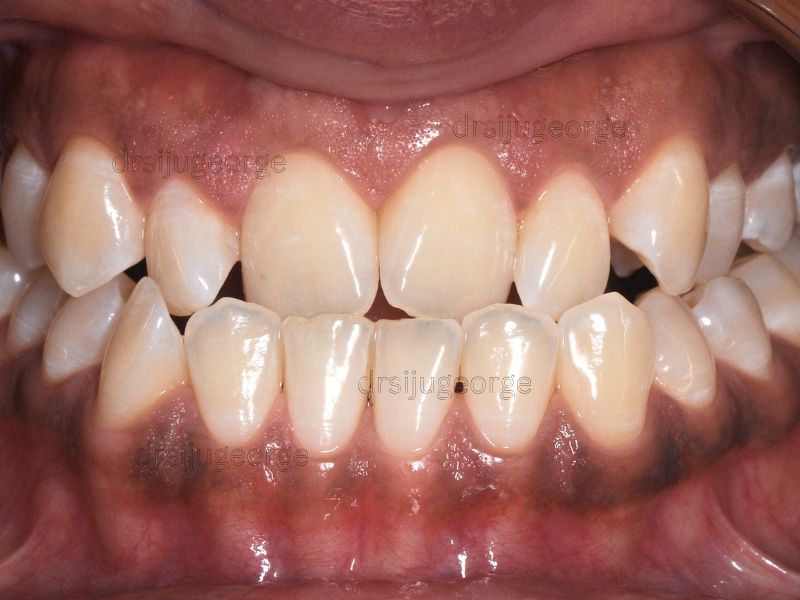
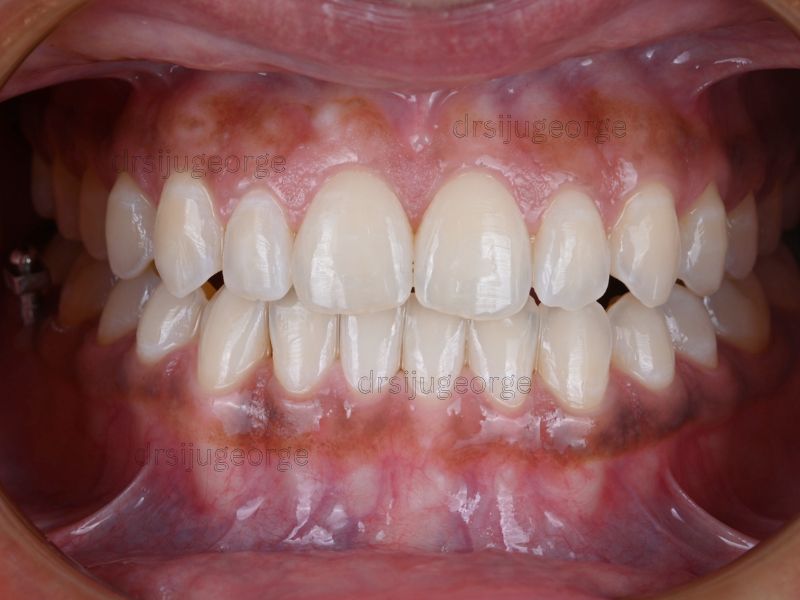
Before treatment — in their own words
His description: he could not chew his food properly, he was not confident smiling because his teeth looked crooked, and he felt his upper teeth were barely visible. Function and appearance were tangled together — the bite that did not work was also the smile he hid.
The clinical picture
Examination confirmed a skeletal Class III with the lower jaw set ahead of the upper, a narrow upper arch, and crowding. There were no cavities and the teeth were healthy — the problem was position and arch width, not disease. The narrow upper arch made the upper teeth recede behind the lowers and contributed to the crowding. The case was significant enough to need careful sequencing, which is why the timeline was longer than average.
The plan
A non-extraction-of-front-teeth plan: develop and widen the upper arch to bring the upper teeth forward into a better relationship, relieve the crowding, and distalise the lower molars (moving the lower arch back slightly) to camouflage the skeletal discrepancy. Lower third molars were planned for removal to make room for that backward movement. Skeletal anchorage was considered to support the lower molar movement where needed.
The outcome
Over thirty months the upper arch was widened, the crowding was resolved, and the lower molars were moved back enough to bring the bite into a functional Class I camouflage — without surgery. The upper teeth now showed properly on smiling, chewing was comfortable, and the smile he had been hiding became one he was willing to show.
Clinical notes (for dental professionals)
- Diagnosis: Skeletal Class III; constricted maxillary arch; crowding; sound dentition (no caries)
- Treatment: Invisalign Comprehensive; maxillary arch development/expansion; crowding relief; mandibular molar distalisation for Class III camouflage
- Auxiliaries: Skeletal anchorage (mini-implants) for lower molar distalisation as required — confirm whether placed
- Extractions: Lower third molars (38, 48)
- Duration: 30 months
- Retention: Vivera upper and lower; periodic skeletal review