Adult · Underbite
The lower jaw that had been in front all his life
He had been assessed by three orthodontists over ten years, each of whom had told him that correcting his underbite would require jaw surgery. He came to Dr. Siju for a fourth opinion. Surgery was not needed. Thirteen months later, his bite was corrected.
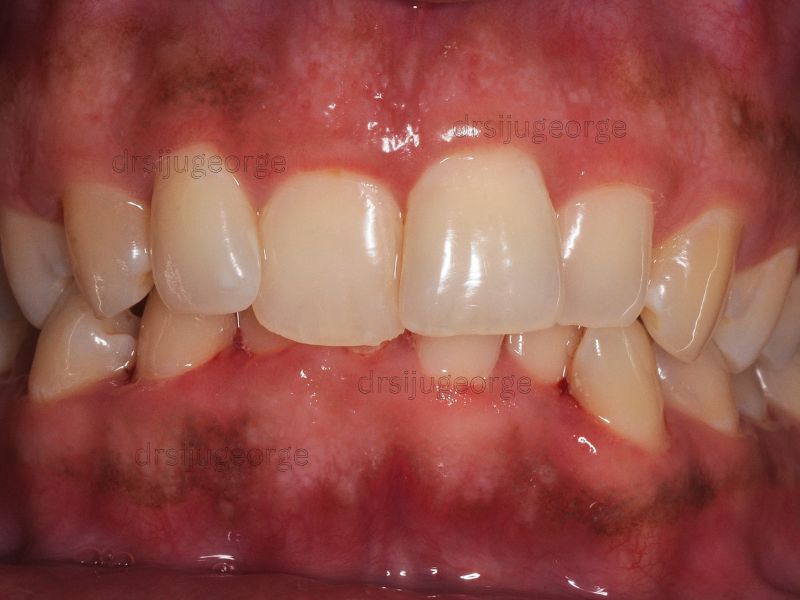
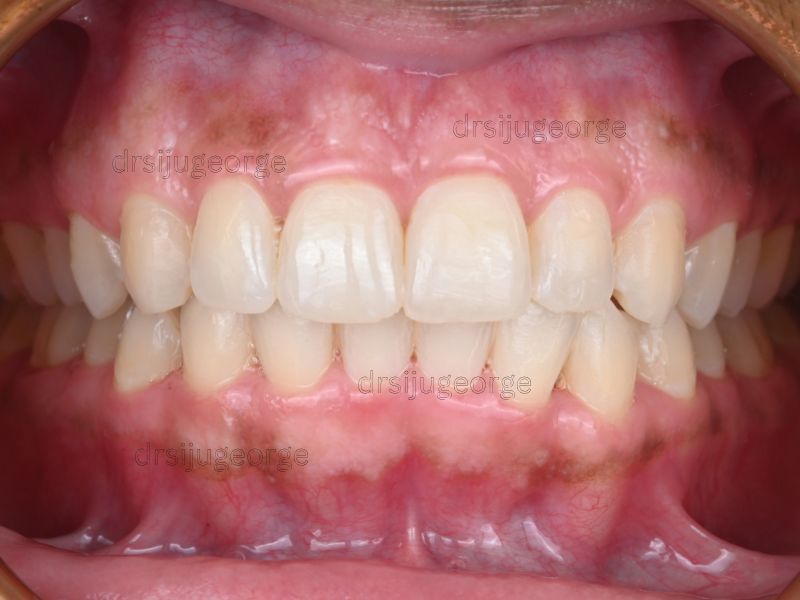
Before treatment — in their own words
He had grown up knowing his bite was different. The lower front teeth sat in front of the upper front teeth when he closed his mouth. He had been assessed three times over the years and told the same thing each time: this would require orthognathic surgery to correct — a procedure involving cutting and repositioning the jawbones under general anaesthesia with a recovery of several months. Each time, he had declined. He was not willing to have surgery for something that was not causing him functional problems. He came to Wassan on the recommendation of a colleague who had been told the same thing and had also been treated without surgery.
The clinical picture
Careful analysis was the key to this case. The clinical underbite was real — the lower incisors were in front of the upper incisors on closure. But the nature of the Class III relationship was critical to determine. Cephalometric analysis showed a mild skeletal Class III component, but within the range where dental camouflage was feasible. More importantly, the lower incisors were proclined and the upper incisors retroclined — the teeth were contributing to the appearance of underbite beyond what the skeletal pattern alone would produce. A functional shift component was also identified: the patient deflected forward at closure to avoid posterior contact.
This was not a case that needed surgery. This was a case that needed the right plan.
The plan
The Invisalign treatment plan addressed both the functional shift and the dental component of the underbite simultaneously. Class III elastics were used to retract the lower arch and advance the upper incisors, working against the skeletal pattern with controlled dental compensation. Bite ramps eliminated the functional shift from the first aligner tray. The posterior contacts were then established to hold the corrected position as treatment progressed. Compliance with Class III elastics was excellent — the patient had waited ten years for a plan he could agree to.
The outcome
Thirteen months after starting treatment, the anterior crossbite was fully corrected. The upper incisors were in front of the lower. The functional shift was gone. The profile had improved. He was fitted with Vivera retainers and a clear occlusal splint for nighttime wear to maintain the corrected position of the lower incisors over the long term.
He has since returned with his younger brother, who had been given the same surgical recommendation elsewhere. His brother started treatment the following month.
Clinical notes (for dental professionals)
- Diagnosis: Mild-moderate Class III skeletal pattern; anterior crossbite; functional shift at closure; lower incisor proclination; upper incisor retroclination; camouflage within dentally feasible range
- Treatment: Invisalign Comprehensive; Class III orthodontic camouflage; bite ramps; Class III elastics
- Auxiliaries: Class III intermaxillary elastics (continuous wear); bite ramps upper anterior; IPR lower anterior for retroclination
- Extractions: None
- Duration: 13 months
- Retention: Vivera upper and lower; long-term occlusal splint for lower incisor position stability