Adult · Open Bite
The open bite she had learned to hide
She could not bite through a sandwich without tilting her head to use her back teeth. She had learned, over years of adulthood, which foods to avoid and which positions worked. Twenty months of Invisalign closed her open bite and changed her diet entirely.
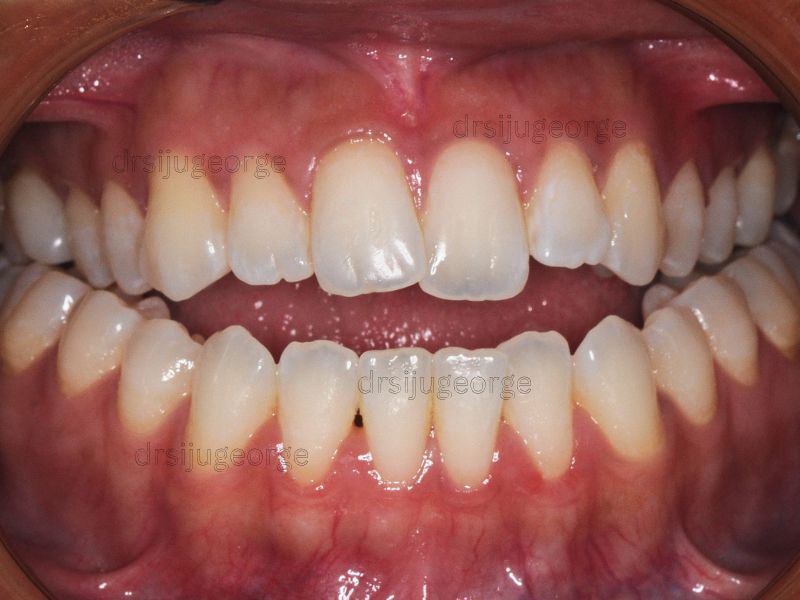
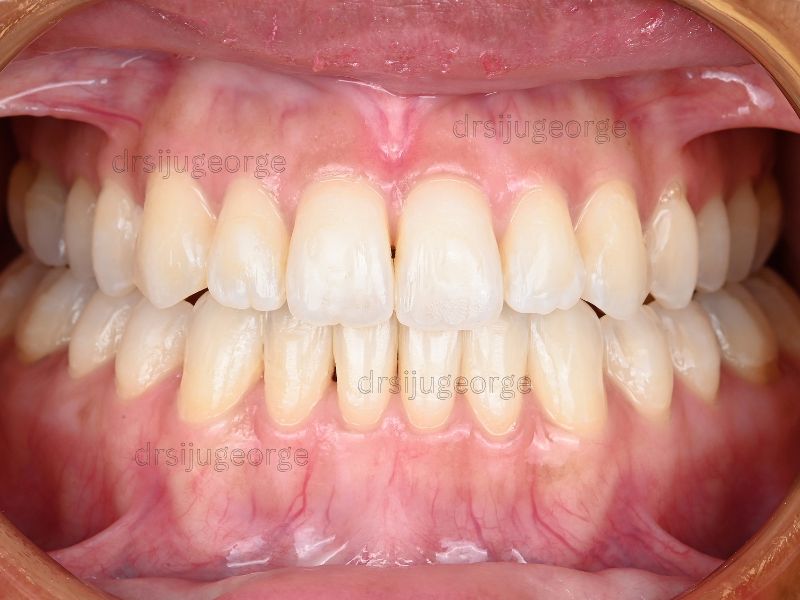
Before treatment — in their own words
She described the way she ate with a matter-of-factness that made clear how long she had been adapting. Sandwiches required tilting. Apples were out. Anything that needed front-tooth incision — biting into food rather than chewing it — either required technique or was simply avoided. She had not connected this to a dental problem. She thought her teeth were just "the way they were." It was a routine dental examination that identified the open bite and referred her for orthodontic assessment.
She was in her late twenties. The open bite had been there since adolescence.
The clinical picture
The anterior open bite measured 4mm at its widest point. The upper and lower front teeth did not touch or overlap at any position — a complete absence of incisal contact. The posterior teeth had been carrying all occlusal load for years. A tongue-thrust swallowing pattern was present — the tongue pushed forward against the open bite space on swallow and at rest, a behaviour that had both contributed to and was now being maintained by the open space. The Class I dental relationship was otherwise normal. No skeletal contribution to the open bite was identified on analysis. Surgical treatment was not required.
The plan
Invisalign Comprehensive treatment was planned using a vertical intrusion strategy: molar intrusion with optimised posterior attachments would allow the front of the bite to close as the posterior teeth were gently depressed. This approach closes open bites by rotating the occlusal plane rather than extruding the anterior teeth, which is more stable long-term. A myofunctional therapy referral was arranged concurrently to address the tongue-thrust pattern — without behavioural change, open bite relapse risk is significantly higher. The patient completed the tongue therapy exercises diligently throughout treatment.
The outcome
At the end of twenty months, the open bite was fully closed. The upper and lower incisors were in contact with 1mm of overbite. The patient reported being able to bite into food normally for the first time in her adult life. She described the experience of eating an apple as something she was not sure she had done since childhood.
A Vivera retainer was fitted with instructions for consistent long-term wear, with the myofunctional therapist continuing reviews for a further six months to consolidate the tongue posture change and reduce relapse risk.
Clinical notes (for dental professionals)
- Diagnosis: Anterior open bite 4mm; tongue-thrust swallowing pattern; posterior occlusal overload; Class I dental; no skeletal open bite component
- Treatment: Invisalign Comprehensive; posterior molar intrusion strategy to rotate occlusal plane; concurrent myofunctional therapy referral
- Auxiliaries: Vertical intrusion attachments posterior; no IPR; light Class II finishing elastics
- Extractions: None
- Duration: 20 months · Refinement performed
- Retention: Vivera upper and lower (indefinite wear); myofunctional therapy continued post-debond for 6 months