Teen · Open Bite
The teen who could not bite into an apple
Her teachers thought she was a fussy eater. She was not fussy. She simply could not close her front teeth together. Nineteen months of Invisalign Teen closed the gap that had been open since childhood and gave her back foods she had quietly avoided for years.
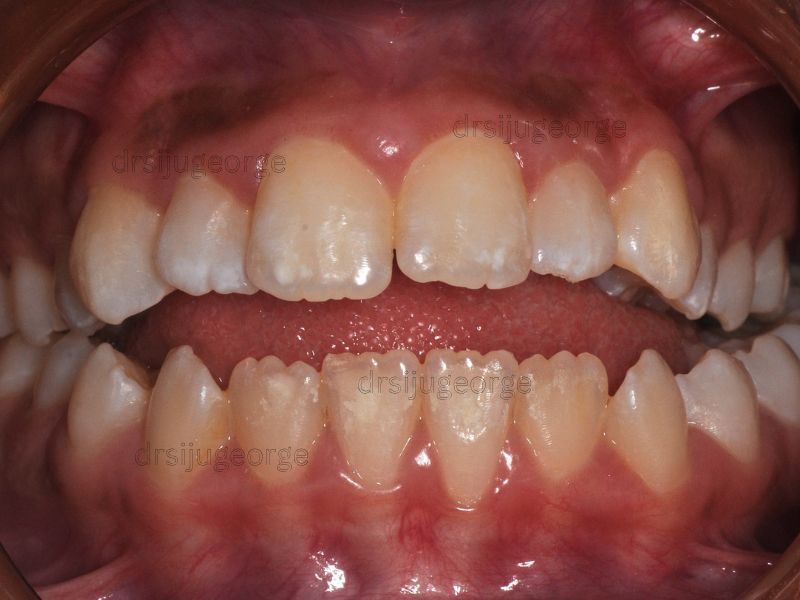
Before treatment — in their own words
She was thirteen when she came in, brought by her mother who had noticed for years that she ate differently from her siblings. She chewed everything to the side, tilted her head when she ate, and avoided certain foods at school. She had not complained about it — she had simply adapted, as children do, without understanding why. Her mother, watching her at meals over years, knew something was different. The family dentist had referred them, suspecting an orthodontic problem.
She had been a thumb-sucker until around age seven. By then, the damage to her bite was already established.
The clinical picture
The anterior open bite measured 5mm. There was no contact between any of the front six teeth on either arch when she closed. The upper arch was constricted — a consequence of the prolonged thumb-sucking habit, which had narrowed the arch while creating a vertical space for the thumb to occupy. A tongue-thrust swallowing pattern had developed secondary to the open space, with the tongue now filling the gap on every swallow and at rest. Without addressing both the dental and functional components, any orthodontic correction would be at significant risk of relapse.
The plan
Invisalign Teen treatment addressed the arch constriction and the open bite simultaneously. Expansion of the upper arch created the transverse width that had been lost during the thumb-sucking years. Vertical control through posterior attachments managed the molar positions to allow the bite to close naturally as space was created anteriorly. A myofunctional therapist worked with the patient concurrently to retrain the tongue posture and swallowing pattern. Her parents reported that she engaged with the tongue exercises more seriously than any homework. She understood exactly why the tongue work mattered.
The outcome
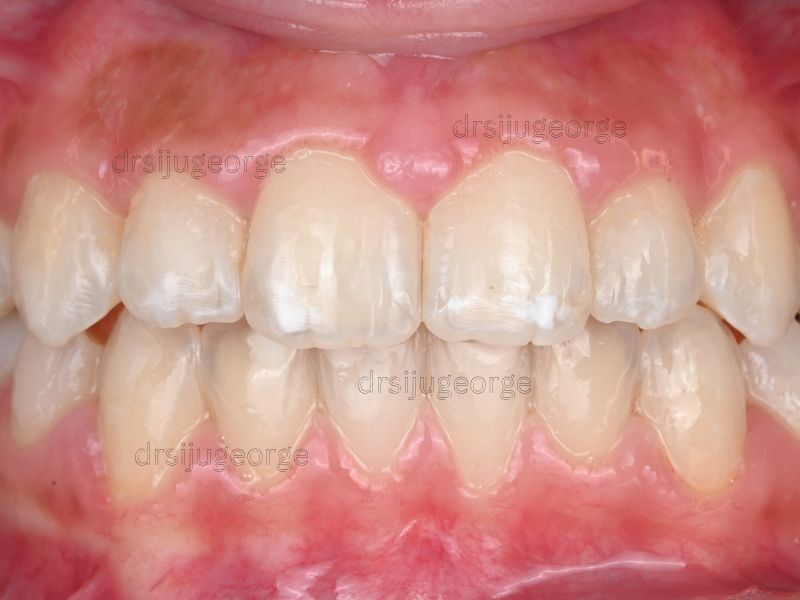
Nineteen months after starting treatment, the open bite was fully closed. All anterior teeth were in contact. The upper arch had been broadened to normal width. The tongue-thrust habit had been significantly reduced through therapy, with the tongue now resting at the palate on closure rather than in the open bite space. A Vivera retainer was fitted, with long-term retention planned as a priority given the history of thumb-sucking and the known tendency for open bites to relapse without diligent retention and maintained tongue posture.
Her mother sent a message six months after debond. She said she had eaten her first whole apple from the school canteen and had come home and told her about it specifically.
Clinical notes (for dental professionals)
- Diagnosis: Anterior open bite 5mm; digit-sucking habit history; constricted upper arch; tongue-thrust swallowing secondary to open space; Class I dental
- Treatment: Invisalign Teen Comprehensive; upper arch expansion; vertical bite closure; concurrent myofunctional therapy referral
- Auxiliaries: Upper arch expansion attachments; posterior vertical control attachments; light finishing elastics
- Extractions: None
- Duration: 19 months
- Retention: Vivera upper and lower (indefinite); myofunctional therapy extended 9 months post-debond; high relapse risk counselled