Adult · Narrow Arches
The narrow smile that wasn’t narrow at all
He had been self-conscious for years about the dark shadows at the corners of his smile when he laughed. One provider had mentioned surgery as a possible solution. What he actually needed was arch expansion — and eighteen months of Invisalign delivered it without a single surgical procedure.
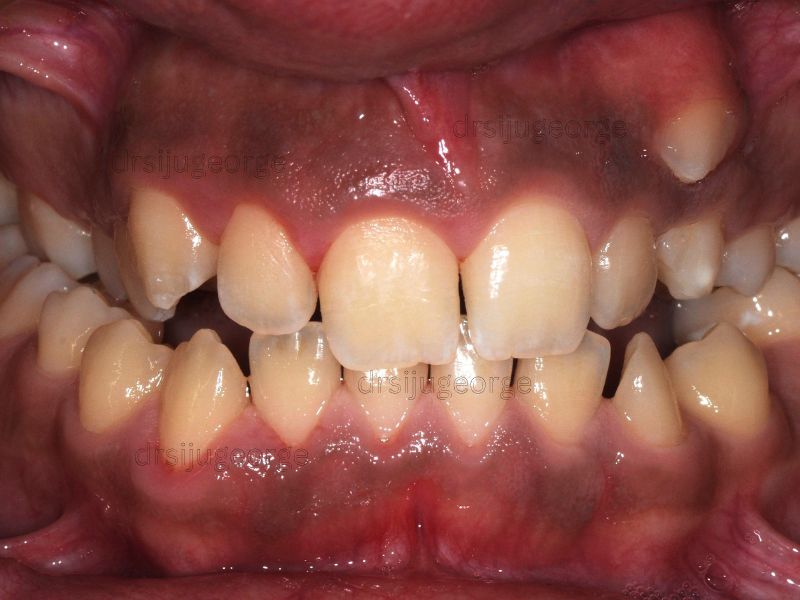
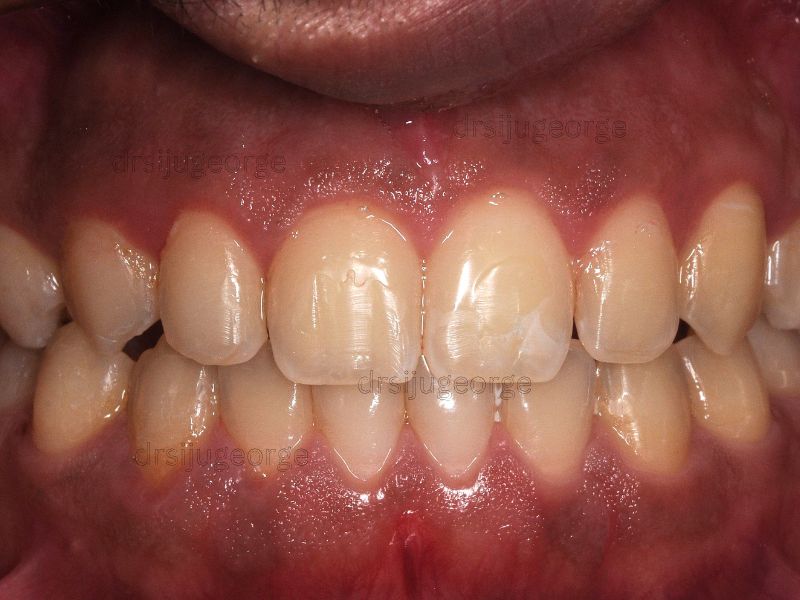
Before treatment — in their own words
He described the problem with remarkable precision for someone who had never been diagnosed with anything. "When I smile widely, there are dark spaces at the sides — like the back of my mouth is showing." He had looked it up online and found the term "buccal corridors." He had found photographs of himself at weddings and events and cropped them to remove the evidence. The smile he wanted to have was wider than the one he had.
A cosmetic consultant had suggested porcelain veneers to mask the appearance. An orthodontist elsewhere had mentioned surgical expansion. He came for a third opinion.
The clinical picture
Clinical examination confirmed bilateral posterior buccal corridors caused by a constricted upper dental arch. The upper posterior teeth were sitting inside the dental arch width they could occupy, creating the visible shadow effect in the buccal corridors when he smiled. Crucially, the skeletal base was not narrow — the problem was dental, not skeletal. There was no transverse skeletal discrepancy that would require surgery. The teeth could be moved into a wider, fuller arch form with Invisalign alone.
Mild Class I crowding in the upper anterior segment would also benefit from the planned expansion.
The plan
A Invisalign Comprehensive plan was designed with posterior arch expansion as the primary goal. The upper arch was gradually widened through sequential aligner movements that expanded the transverse width of the dental arch and simultaneously resolved the crowding anteriorly. Attachments were placed to optimise the expansion movements, particularly at the premolar and molar positions. The lower arch required only minor alignment adjustment to coordinate with the expanded upper arch at the finish.
The outcome
The buccal corridors that had been the source of his self-consciousness for years were gone. His smile line was broader and fuller. The upper crowding was resolved. The bite was stable. He attended his final appointment having already had professional photographs taken, and he showed Dr. Siju one where he was laughing with his mouth fully open — something he described as something he had not done in front of a camera for at least ten years.
There had been no surgery. There were no veneers. There were only aligned, expanded teeth in the position they were always capable of occupying.
Clinical notes (for dental professionals)
- Diagnosis: Bilateral posterior buccal corridors; constricted upper dental arch; mild upper anterior crowding; no skeletal transverse discrepancy; Class I
- Treatment: Invisalign Comprehensive; dental arch expansion upper; lower arch alignment
- Auxiliaries: Optimised expansion attachments at 14, 15, 24, 25; IPR upper anterior; light Class II finishing elastics
- Extractions: None
- Duration: 18 months · Refinement performed
- Retention: Vivera upper and lower; patient warned on importance of consistent wear to maintain arch expansion