Quick Answer
A receding chin in a child may simply reflect family facial features, but it can also be associated with a Class II jaw relationship, where the lower jaw appears set back relative to the upper jaw. In some children, early orthodontic assessment can help determine whether this is something to monitor or whether growth guidance may be useful at the right stage.
Parents usually notice a receding chin in one of two ways.
Sometimes they see it in profile photos. Other times, they are not worried about the face at all — they come in because of prominent front teeth, a deep bite, or crowded teeth, and the jaw relationship becomes part of the discussion.
A “weak chin” is not always a problem. But in some children, it is a sign that the upper and lower jaws are not growing in ideal balance.
What Does “Receding Chin” Mean?
In everyday language, it means the chin looks further back than expected. Orthodontically, we look beyond the chin point itself and assess:
- the position of the upper and lower jaws
- the bite relationship
- facial proportions
- growth pattern
- lip posture and profile
A child may have a small-looking chin because of normal family genetics. In other cases, the lower jaw may be developing in a more retruded position.
What Is a Class II Jaw Relationship?
This is one of the more common growth patterns seen in orthodontics.
In a Class II pattern:
- the upper teeth may sit significantly ahead of the lower teeth
- the lower jaw may appear further back
- the overjet may be increased
- the chin may look less prominent in profile
This can vary from mild to more significant.
Why It Matters
A receding chin is not only about appearance. In some children, the jaw relationship may also be linked to:
- prominent front teeth that are more vulnerable to trauma
- deep bite
- functional bite imbalance
- lip incompetence or difficulty keeping lips comfortably together
That does not mean every child with a receding chin needs treatment. But it does mean the pattern deserves assessment if other signs are present.
Can It Be Improved During Growth?
Sometimes, yes.
In growing children, orthodontists may use growth modification approaches in selected cases to help guide jaw development while growth is still active. The exact timing depends on:
- the child’s age
- stage of dental development
- severity of the discrepancy
- growth potential
The aim is not to “force” a jaw into a completely different shape. It is to take advantage of natural growth at the right time.
When Should Parents Seek an Assessment?
You may want an orthodontic review if your child has:
- a visibly receding chin
- protruding upper front teeth
- a large overjet
- deep bite
- mouth-open posture
- a family history of significant jaw imbalance
- concerns about teasing or confidence related to facial profile
In Oman, many families wait until all the permanent teeth have erupted. But for growth-related concerns, earlier assessment often gives more options.
What Happens at the Visit?
An orthodontic assessment may include:
- examination of the bite
- facial and profile analysis
- evaluation of growth stage
- digital records and radiographs when indicated
- discussion of whether monitoring or early treatment is appropriate
In many children, the best first step is observation over time. In others, timing matters — and catching the issue earlier can simplify what comes later.
The Bottom Line
A receding chin may be nothing more than a normal family feature. But in some children, it is part of a broader jaw relationship that can affect the bite, the teeth, and facial balance.
The best time to evaluate that is before growth is finished, not after.
If you are concerned about your child’s profile, prominent front teeth, or bite, an orthodontic assessment can help you understand whether this is simply a trait to monitor or something that may benefit from treatment at the right time.
How Dr. Siju Assesses Jaw Growth in Children
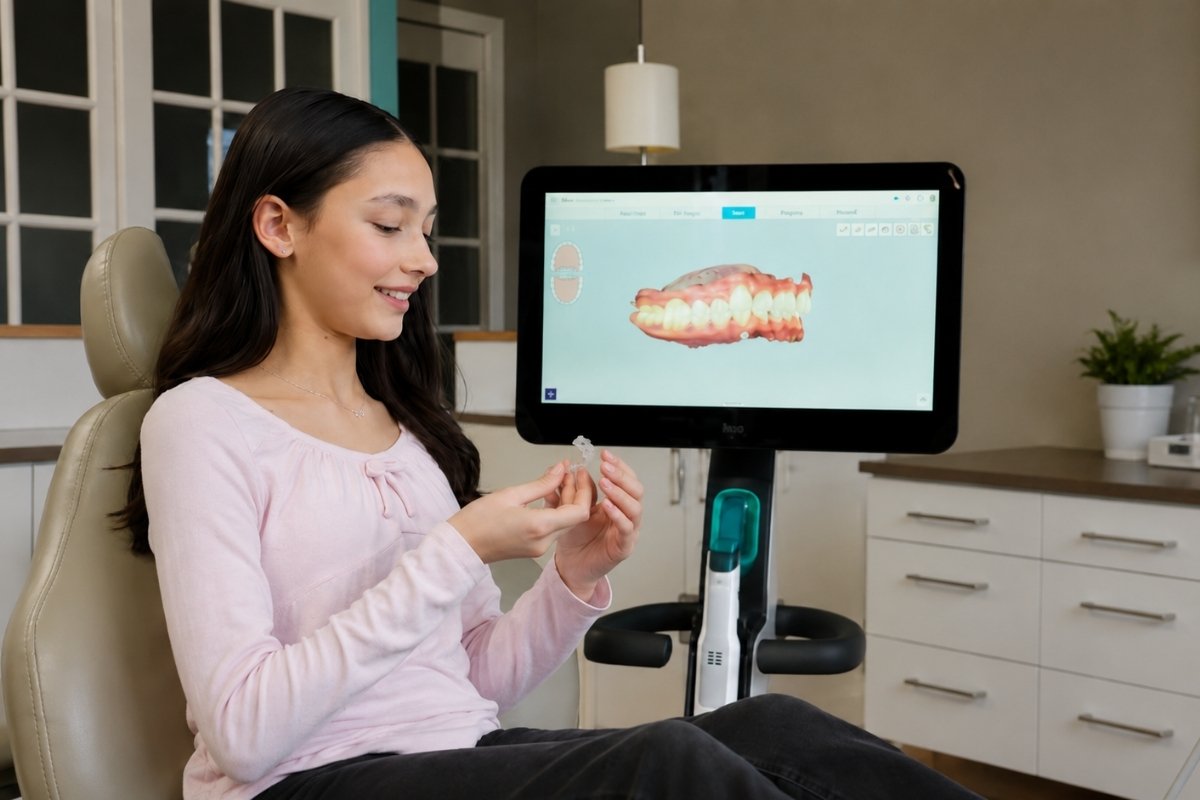
At Wassan Dental Centre, Dr. Siju George uses digital scanning and clinical examination to evaluate jaw growth patterns in children. With more than 12,000 orthodontic cases treated, he has extensive experience recognising the subtle signs of Class II growth patterns — where the lower jaw sits further back relative to the upper jaw.
The assessment includes evaluating the child's facial profile, the relationship between the upper and lower teeth, the position of the chin relative to the forehead and nose, and whether the lower jaw appears to be growing at a normal rate. Digital scans and photographs allow Dr. Siju to track changes over time and determine the optimal timing for any intervention.
If treatment is needed, options may include functional appliances that encourage forward growth of the lower jaw during the child's growth years, or Invisalign with mandibular advancement features in appropriate cases. Dr. Siju's approach is conservative — he recommends treatment only when there is a clear clinical benefit, and he explains every option transparently to parents.
Families from across Oman, including Muscat, Nizwa, Sohar, Salalah, and Ibri, bring their children to Wassan for specialist orthodontic growth assessments.
Frequently Asked Questions
Is a receding chin always a problem?
Can orthodontics fix a receding chin?
At what age should I get my child checked?
Does a receding chin mean my child will need jaw surgery?

About the Author
Dr. Siju George is a Specialist Orthodontist and Blue Diamond Invisalign Provider at Wassan Specialty Dental Centre, Muscat. With 20+ years of experience and over 12,000 cases treated, Dr. George holds an MSc in Aligner Orthodontics from the University of Turin and is the only Blue Diamond Invisalign Provider in Oman.
Book a Consultation with Dr. Siju George
Wassan Dental Centre, Al Khuwair, Muscat. Open Saturday – Thursday, 9:00 AM – 8:30 PM. A clinical examination and digital scan can show you what treatment involves — with no pressure and no obligation.