Quick Answer
Invisalign in Oman typically costs between OMR 1,500 and OMR 3,500, depending on case complexity, the Invisalign package required, whether advanced orthodontic auxiliaries are needed, and the type of retainer selected after treatment. This guide explains what drives the price, what is usually included, and how to evaluate value rather than cost alone.
Let's address the question you actually came here to answer.
Invisalign in Oman typically costs between OMR 1,500 and OMR 3,500. That's a wide range, and every patient I meet wants to know: "Why can't you just give me a number?"
The reason is simple — Invisalign isn't a single product. It's a system with different treatment options designed for different levels of complexity. Your cost depends on your teeth, your bite, your treatment goals, the type of Invisalign package required, the type of retainer selected after treatment, and whether any advanced orthodontic auxiliaries are needed.
A simple alignment case is very different from a complex bite correction involving growth modification, palatal expansion, TADs, MAOB, or other advanced support systems. But I can explain exactly what drives that number, what you're actually paying for, and how to think about value rather than just price.
Why the Range Is So Wide
Invisalign offers several treatment packages, each designed for a different level of case complexity:
designed for mild to moderate cases: minor crowding, small gaps, or slight relapse from previous orthodontic treatment. These require fewer aligners and a shorter treatment period. In Oman, these cases usually fall in the OMR 1,500 – 2,000 range.
the full system, designed for moderate to complex cases: significant crowding, bite correction, deep bites, open bites, crossbites, Class II or Class III malocclusions, and cases requiring refinements. Cost is typically OMR 2,500 – 3,500+ depending on complexity.
designed for younger children, usually around ages 6–10, who need early interceptive treatment such as arch development, eruption guidance, or palatal expansion. Pricing varies based on the specific intervention.
The difference between the low and high end of the range isn't simply markup — it's scope. A case requiring 14 aligners and a few check-ups is fundamentally different from one requiring 50+ aligners, bite correction, multiple refinements, specialist monitoring, and long-term retention.
What You're Actually Paying For
When patients compare Invisalign prices between clinics, they're often comparing very different things.
Here's what should be considered in a comprehensive Invisalign treatment fee:
This is the most important component and the one that varies most between providers. It includes:
manufactured by Align Technology at their facilities. The material, precision manufacturing, and ClinCheck software platform are part of the Invisalign system.
this is the part patients do not always see. Two doctors using the same Invisalign system can produce very different ClinCheck plans — and very different results.
A provider who has treated 50 Invisalign cases designs a treatment plan differently from one who has treated thousands. They know which movements are predictable, which need over-correction, how to stage movements efficiently, and when extra support systems are needed. That experience reduces treatment time, improves outcomes, and often means fewer complications — which has its own value.
What Is Usually Included in Invisalign Treatment?
Many patients worry that every small item will be charged separately. At Wassan, most routine treatment aids required during Invisalign treatment are generally included as part of the comprehensive treatment plan.
These may include:
- Attachments for controlled tooth movement
- Elastics for bite correction where required
- Precision cuts for elastic wear
- Interproximal reduction, or IPR, when clinically needed
- Pontics to temporarily hide spaces during treatment
- Chewies or similar aligner seating aids
- Progress scans and monitoring
- Refinement planning where required, depending on the package
These are part of proper Invisalign treatment planning and are not usually treated as separate “surprise” costs.
However, some cases require more advanced orthodontic auxiliaries or appliances. These are different from routine aligner aids and may affect the total cost.
Advanced Auxiliaries That May Affect Cost
Some Invisalign cases require additional orthodontic support beyond aligners, attachments, elastics, IPR, or pontics.
These advanced auxiliaries are not needed for every patient. If they are required, they will be discussed during the consultation or during treatment, depending on how the case develops.
Examples include:
- Palatal expanders
- TADs, or temporary anchorage devices
- MAOB, or mandibular advancement with occlusal blocks
- Other advanced appliances or support systems required for complex tooth movement, jaw development, or bite correction
These may influence the overall cost because they involve additional diagnosis, planning, clinical time, materials, and follow-up.
Palatal Expanders
In growing children with a narrow upper jaw, crossbite, or developing crowding, a palatal expander may be recommended as part of early orthodontic treatment.
Expansion is not the same as standard adult Invisalign alignment. It is a growth-related intervention designed to widen the upper arch while the child is still developing.
This may help create space, improve crossbite, and reduce the complexity of future treatment in selected cases.
If a palatal expander is required, this will be explained during the consultation and included in the treatment discussion before the family commits to the plan.
TADs
TADs, or temporary anchorage devices, are small temporary anchorage points used in selected advanced orthodontic cases. They can help with difficult movements such as intrusion, space closure, anchorage control, or complex bite correction.
TADs are not required for every Invisalign patient. But when they are needed, they add precision and control in complex cases.
Because they involve additional clinical procedures and monitoring, they may affect the overall cost.
MAOB
MAOB stands for mandibular advancement with occlusal blocks. It may be used in selected growing patients with Class II bite relationships, where lower jaw advancement or bite correction is part of the treatment goal.
This is very different from simple cosmetic tooth alignment. It requires careful case selection, timing, planning, and monitoring.
If MAOB is needed, it will be discussed clearly as part of the treatment plan.
Why Retainers Affect Invisalign Cost
Orthodontic treatment does not end when the last aligner is removed. Retainers are essential to maintain the result.
There are different types of retainers, and the type selected can affect the final cost.
Fixed Retainers
A fixed retainer is a thin wire bonded behind the teeth, usually the front teeth. It helps hold the teeth in position without needing the patient to remember to wear it daily.
Fixed retainers are useful for patients with a higher risk of relapse, especially in the lower front teeth.
Essix Retainers
Essix retainers are clear removable retainers custom-made by a dental laboratory. At Wassan, these may be fabricated through a local lab depending on the treatment plan.
They are worn as instructed, usually at night after the initial retention phase.
Essix retainers are a reliable and commonly used option for maintaining results.
Vivera Retainers
Vivera retainers are premium retainers made by Align Technology, the makers of Invisalign. They are manufactured using digital records and are designed to be strong, precise, and durable.
Vivera retainers usually cost more than standard Essix retainers, but many patients prefer them because they come from the Invisalign system and are supplied in multiple sets.
The retainer option selected — fixed retainer, Essix retainer, Vivera retainer, or a combination — can influence the final treatment investment.
Why the Cheapest Option Isn't Always the Best Value
I meet patients who've been quoted OMR 1,200 at one clinic and OMR 3,000 at another for what seems like the same treatment. They understandably wonder why they shouldn't go with the lower price.
Here are the questions worth asking:
What tier is included? A quote for Invisalign Lite will be lower than Comprehensive. If your case actually needs Comprehensive and you've been quoted Lite, you may end up paying extra for refinements — or worse, ending up with an incomplete result.
Are refinement aligners included? In many cases, the first series of aligners gets you most of the way there. The remaining fine-tuning that makes a good result great may require refinement aligners. Some clinics include these in the fee. Others charge additionally. Ask before you start.
Are routine treatment aids included? Attachments, elastics, IPR, pontics, progress scans, and aligner seating aids may be included in some comprehensive plans. Always ask what is covered.
Are advanced auxiliaries needed? If your case requires a palatal expander, TADs, MAOB, or another advanced appliance, ask whether this is included or charged separately.
Which retainers are included? Fixed retainers, Essix retainers, and Vivera retainers are different. They can affect both cost and long-term maintenance.
Who is planning your ClinCheck? Is it the treating doctor, or is it delegated? Is the ClinCheck accepted as-is from Align Technology, or does your doctor modify and refine it? A carefully customised plan takes more time and expertise but produces better results.
What's the provider's experience? Align Technology's provider tier system reflects annual case volume. A higher-tier provider has more experience, which typically translates to better planning, fewer complications, and more efficient treatment.
How to Make Invisalign More Affordable
Cost is the number one reason patients in Oman hesitate about orthodontic treatment. I understand that — and I believe financial barriers shouldn't prevent someone from getting treatment they need.
Here's how patients at Wassan manage the investment:
Flexible monthly payment plans can spread the cost across your treatment period. When you break it down, many patients find the monthly cost more manageable than they expected.
Some health insurance plans in Oman include orthodontic benefits — either full or partial coverage. It's worth checking your policy before your consultation. Our team can help verify your coverage and handle the paperwork.
Periodically, Wassan holds Invisalign Open Days and Smile Fest events where patients can receive a complimentary digital scan and smile simulation. These events are an opportunity to understand your treatment needs and costs before committing.
What Should Be Included in a Proper Invisalign Quote?
Before comparing prices, ask whether the quote includes:
- Consultation and diagnosis
- Digital 3D scan
- Photographs and X-rays
- CBCT scan if clinically required
- ClinCheck planning by the orthodontist
- Attachments
- Elastics and bite correction components if needed
- IPR if needed
- Pontics if needed
- Progress scans
- Refinements
- Emergency or review appointments
- Fixed retainers
- Essix retainers
- Vivera retainers if selected
- Retainer follow-up
- Advanced auxiliaries such as palatal expanders, TADs, or MAOB if required
If two clinics quote very different prices, this checklist often explains why.
The Real Cost of Not Treating
This isn't a scare tactic — it's something I observe clinically, year after year.
Patients who delay orthodontic treatment because of cost sometimes end up spending more in the long run. Crowded teeth are harder to clean, leading to more fillings, gum treatment, and eventually more complex dental work. Bite problems can cause uneven wear on teeth, which may lead to cracked teeth, failing restorations, and jaw discomfort.
A tooth lost to decay or gum disease in a crowded area may eventually need an implant — which can cost as much as or more than orthodontic treatment that could have helped prevent the problem.
I've treated patients in their 40s and 50s who say the same thing: "I wish I'd done this twenty years ago." Not just for the smile — but because the dental problems that accumulated over those years cost them far more than the aligners would have.
How to Get Your Specific Cost
Every mouth is different, which is why I can't — and wouldn't — give you a final price without seeing your teeth first.
A consultation at Wassan Dental Centre includes a clinical examination and, on Open Day events, a complimentary 3D digital scan. From that, I can show you what treatment involves, what the projected result looks like, which routine aids are included, whether advanced auxiliaries may be needed, what retainer options are available, and what it will cost — with no pressure and no obligation.
If you've been thinking about straightening your teeth but the cost has been holding you back, come in and get the real number for your case. You may be surprised — many patients expect it to be more than it actually is.
Frequently Asked Questions
Why does Invisalign cost vary so much?
Are elastics, IPR and pontics included in Invisalign treatment?
Which auxiliaries may cost extra?
What are TADs in Invisalign treatment?
What is MAOB?
Does every Invisalign patient need advanced auxiliaries?
Are retainers included after Invisalign?
What is the difference between Essix and Vivera retainers?
About the Author
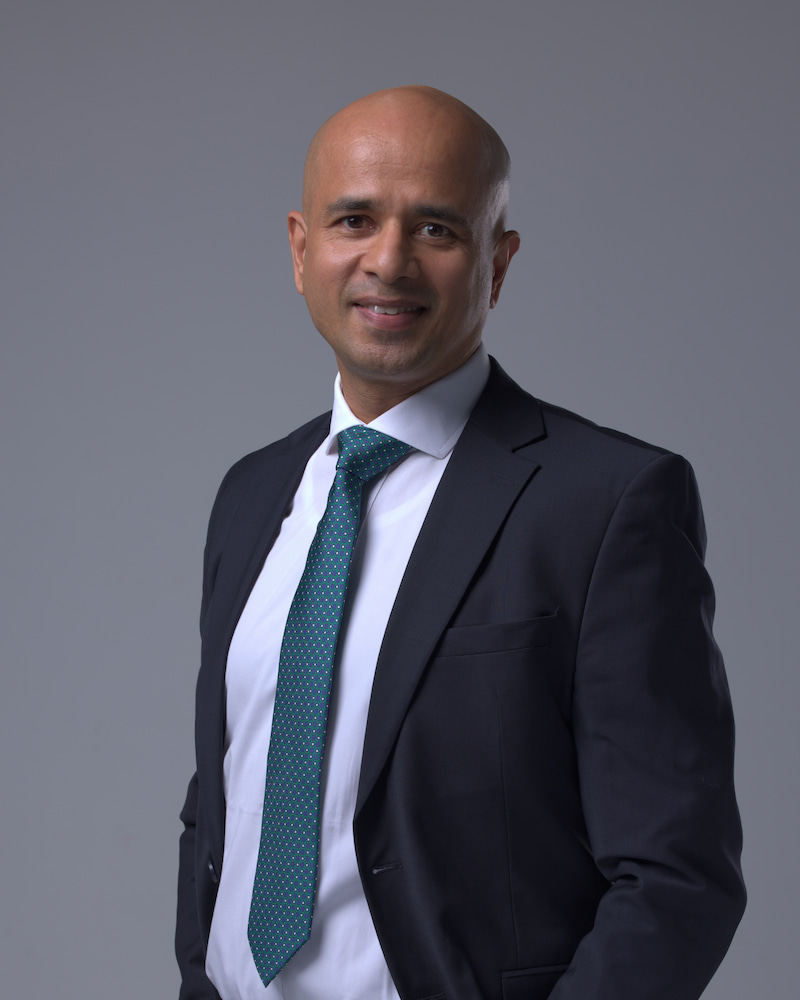
Dr. Siju George is a Specialist Orthodontist and Blue Diamond Apex Invisalign Provider at Wassan Specialty Dental Centre, Muscat. With 20+ years of experience and over 12,000 cases treated, Dr. George holds an MSc in Aligner Orthodontics from the University of Turin and is the only Blue Diamond Apex Invisalign Provider in Oman.
Book a Consultation with Dr. Siju George
Wassan Dental Centre, Al Khuwair, Muscat. Open Saturday – Thursday, 9:00 AM – 8:30 PM. A clinical examination and digital scan can show you what treatment involves — with no pressure and no obligation.