
What Does "Impacted" Actually Mean?
A tooth is impacted when it fails to erupt into the mouth in its expected position and timeframe. Instead of moving downward (or upward, for lower teeth) through the bone and gum into the dental arch, it gets stuck – sometimes horizontally, sometimes angled toward neighbouring teeth, sometimes buried deep in the palate.
The reasons vary:
If there isn't enough space in the arch, the canine – which is one of the last permanent teeth to erupt – may have nowhere to go.
An extra tooth, a cyst, or the roots of adjacent teeth can block the canine's natural eruption path.
Impacted canines often run in families. If a parent or sibling had one, there's a higher likelihood.
The canine normally follows the root of the lateral incisor (the tooth next to it) as a guide during eruption. If the lateral incisor is missing, small, or poorly positioned, the canine can lose its way.
Why Early Detection Makes All the Difference
This is one of the strongest arguments for bringing children to an orthodontist around age 7 – not because they'll need treatment immediately, but because specific problems like ectopic canines are far easier to manage when caught early.
At age 9-10, if a clinical examination and X-ray reveal that a canine is heading off course, there are simple interventions – like extracting the baby canine to remove an obstruction, or using a palatal expander to create space – that can redirect the permanent canine's eruption path naturally.
By age 13-14, those options narrow. The tooth may be deeply impacted, angled toward other roots, or surrounded by dense bone. Treatment becomes more complex, longer, and sometimes requires surgical exposure.
The difference between an early catch and a late one can be the difference between a six-month monitoring period and an 18-month combined surgical-orthodontic treatment.
How Orthodontic Treatment Brings an Impacted Canine Into Place
When an impacted canine hasn't responded to early interceptive measures – or when it's detected later – the treatment typically involves a partnership between an orthodontist and an oral surgeon.
Step 1: Comprehensive assessment. We use 3D imaging (CBCT scans) to determine the exact position, angulation, and proximity to neighbouring roots. This is critical – a 2D X-ray can be misleading about where the tooth actually sits in three-dimensional space.
Step 2: Create space. Before we can guide the impacted canine into the arch, there needs to be room for it. This often means orthodontic treatment first – using braces or aligners to open up the necessary space by moving adjacent teeth apart.
Step 3: Surgical exposure. An oral surgeon makes a small opening in the gum (and sometimes bone) to access the buried canine and bonds a small bracket or button to it. A gold chain or elastic thread is attached, providing a point of connection for the orthodontist.
Step 4: Guided eruption. Over the following months, gentle orthodontic force is applied through the chain to slowly pull the canine into the arch. This requires patience – the tooth is moving through bone, and rushing creates risks to the tooth itself and to neighbouring roots.
Step 5: Fine-tuning. Once the canine has erupted into approximately the right position, standard orthodontic mechanics (braces or aligners) fine-tune its alignment, root angulation, and integration into the bite.
The total treatment time varies significantly depending on the severity of impaction. Mild cases caught early may resolve in months. Deeply impacted canines in older teenagers or adults can take 18 months or more of active treatment.
What Happens If You Do Nothing?
Some families, understandably, ask: "What if we just leave it?"
If an impacted canine is left untreated, several problems can develop:
The follicle (sac) around the impacted tooth can develop into a cyst, which gradually enlarges and destroys surrounding bone.
The impacted canine can press against the roots of neighbouring teeth – particularly the lateral incisors – causing them to shorten or dissolve. This can lead to the loss of perfectly healthy teeth.
The retained baby tooth will eventually fail – baby teeth aren't designed to last a lifetime. When it's lost, the patient is left with a gap and limited options for replacement.
Missing a canine affects smile aesthetics, chewing efficiency, and bite stability. Replacing it with an implant is possible but never as good as having the natural tooth in place.
For these reasons, "watch and wait" is only appropriate when monitoring an early ectopic canine that may self-correct. Once a canine is confirmed impacted in an older child or adult, active treatment is almost always recommended.
Aligners and Impacted Canines
A question I hear frequently: "Can this be done with Invisalign instead of braces?"
The answer is nuanced. Aligners can effectively create space for an impacted canine and can manage much of the fine-tuning phase once the tooth is in the arch. The guided eruption phase – applying controlled force through a bonded chain – has traditionally been done with fixed braces, as they provide more precise control over the direction of pull.
However, with advances in aligner biomechanics and auxiliary attachment systems, more impacted canine cases are being managed with a combination approach: aligners for space creation and final alignment, with temporary fixed attachments for the active traction phase.
Each case is different. The decision depends on the severity of impaction, the patient's overall treatment plan, and what will deliver the best, most predictable result. This is a conversation best had during a detailed consultation with a specialist who has experience with both approaches.
What Parents and Patients Should Remember
Impacted canines are common, treatable, and rarely require extraction. The single most important factor in outcome is timing – earlier detection means simpler, shorter, more predictable treatment.
If your child is 9-10 years old and an upper canine hasn't erupted, or if you can still feel a baby canine firmly in place when the adult one should have come through, it's worth an assessment.
And if you're an adult with an impacted canine that was never treated – it's not necessarily too late. Adult impacted canine treatment is more complex and slower, but with the right specialist, many of these teeth can still be saved and brought into function.
Frequently Asked Questions
What is an impacted canine?
Why are canines important?
How are impacted canines diagnosed?
Can impacted canines be treated without extraction?
About the Author
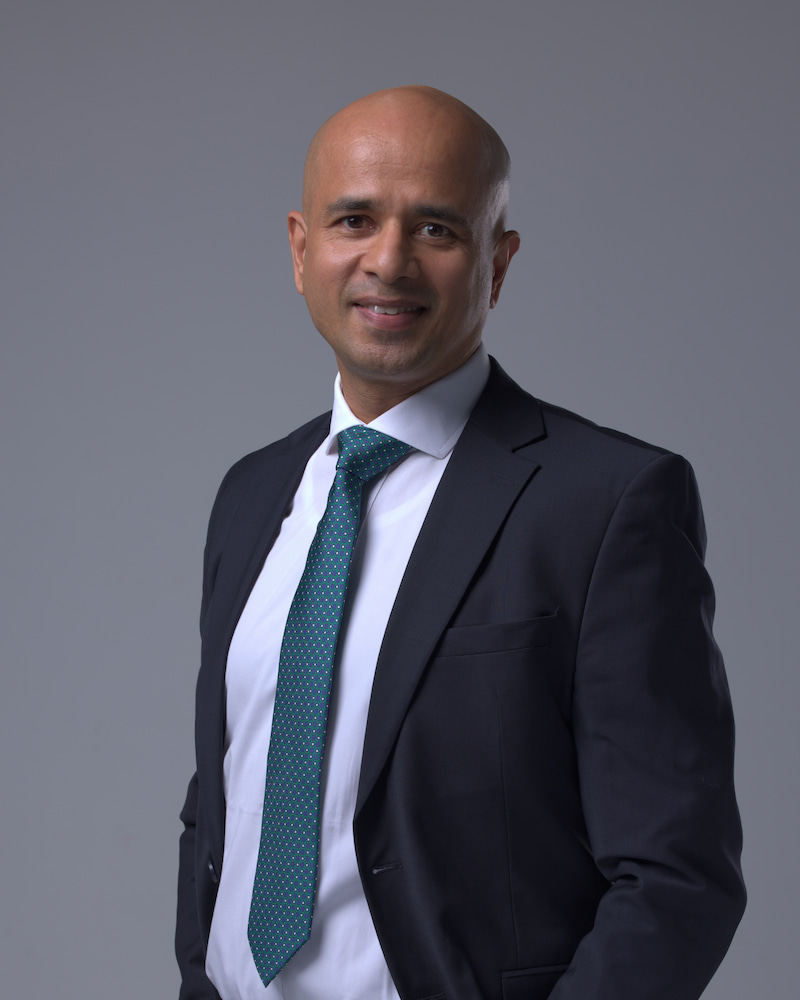
Dr. Siju George is a Specialist Orthodontist and Blue Diamond Invisalign Provider at Wassan Specialty Dental Centre, Muscat. With 20+ years of experience and over 12,000 cases treated, Dr. George holds an MSc in Aligner Orthodontics from the University of Turin and is the only Blue Diamond Invisalign Provider in Oman.
Book a Consultation with Dr. Siju George
Wassan Dental Centre, Al Khuwair, Muscat. Open Saturday – Thursday, 9:00 AM – 8:30 PM. A clinical examination and digital scan can show you what treatment involves — with no pressure and no obligation.